
The multi use games area at Oastlers School in Keighley had the kind of problem every site manager recognises on sight. The mesh fencing round the court was moving. Posts leaning, whole runs shifting when somebody pushed against them.
The fence had been in twelve to eighteen months.
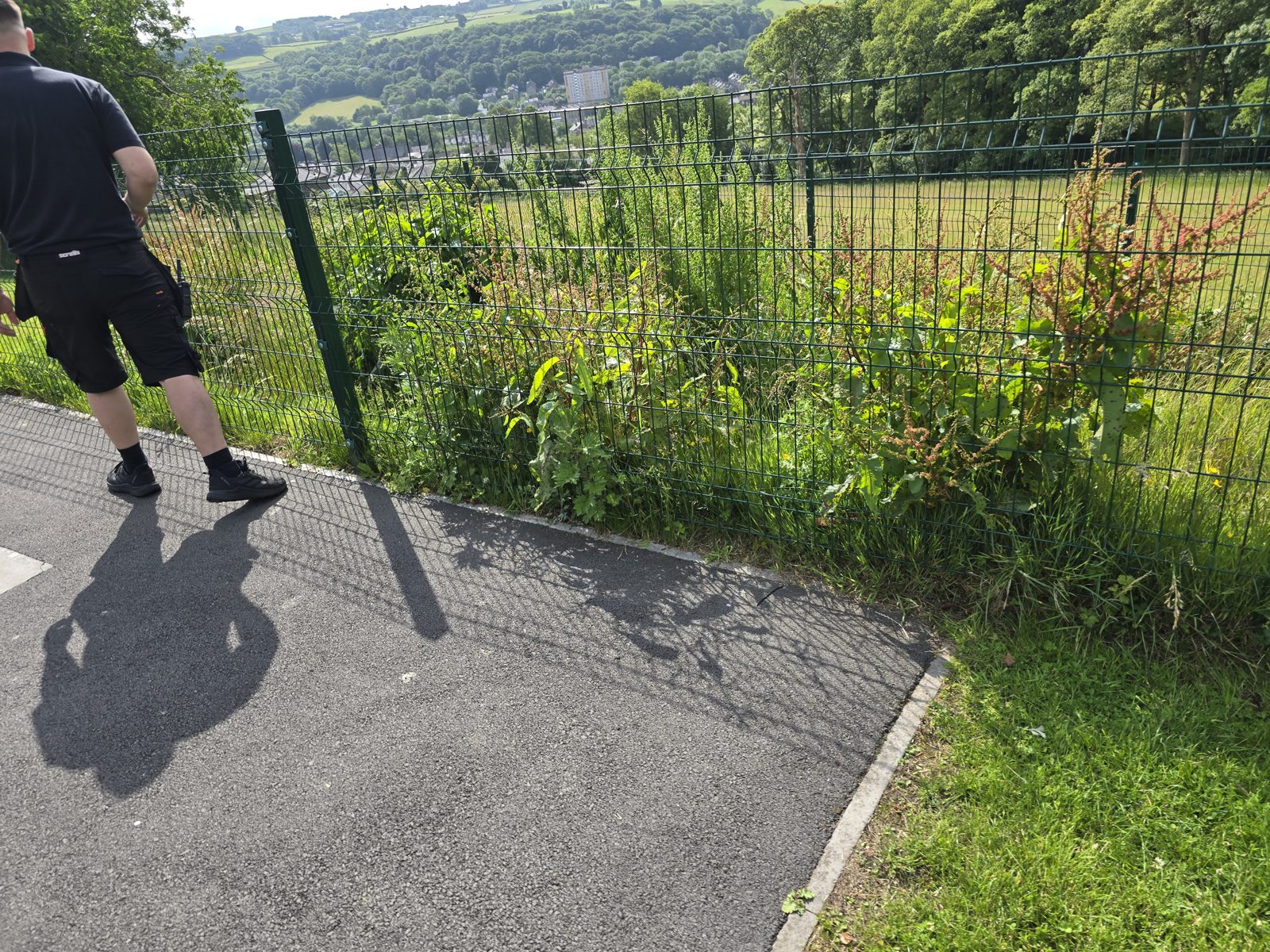
It went in under a different contractor, before the school came under the umbrella of Exceed Academies Trust, so nobody currently responsible for the site had specified it, chosen it or signed it off. They had inherited it. That is a very common position for a trust estates lead to be in, and it is an awkward one, because the obvious next move is to get somebody out to straighten the posts and carry on.
Fencing that new should not be going anywhere. So the first job was not to fix it. It was to find out why it had failed.
What the trial holes showed
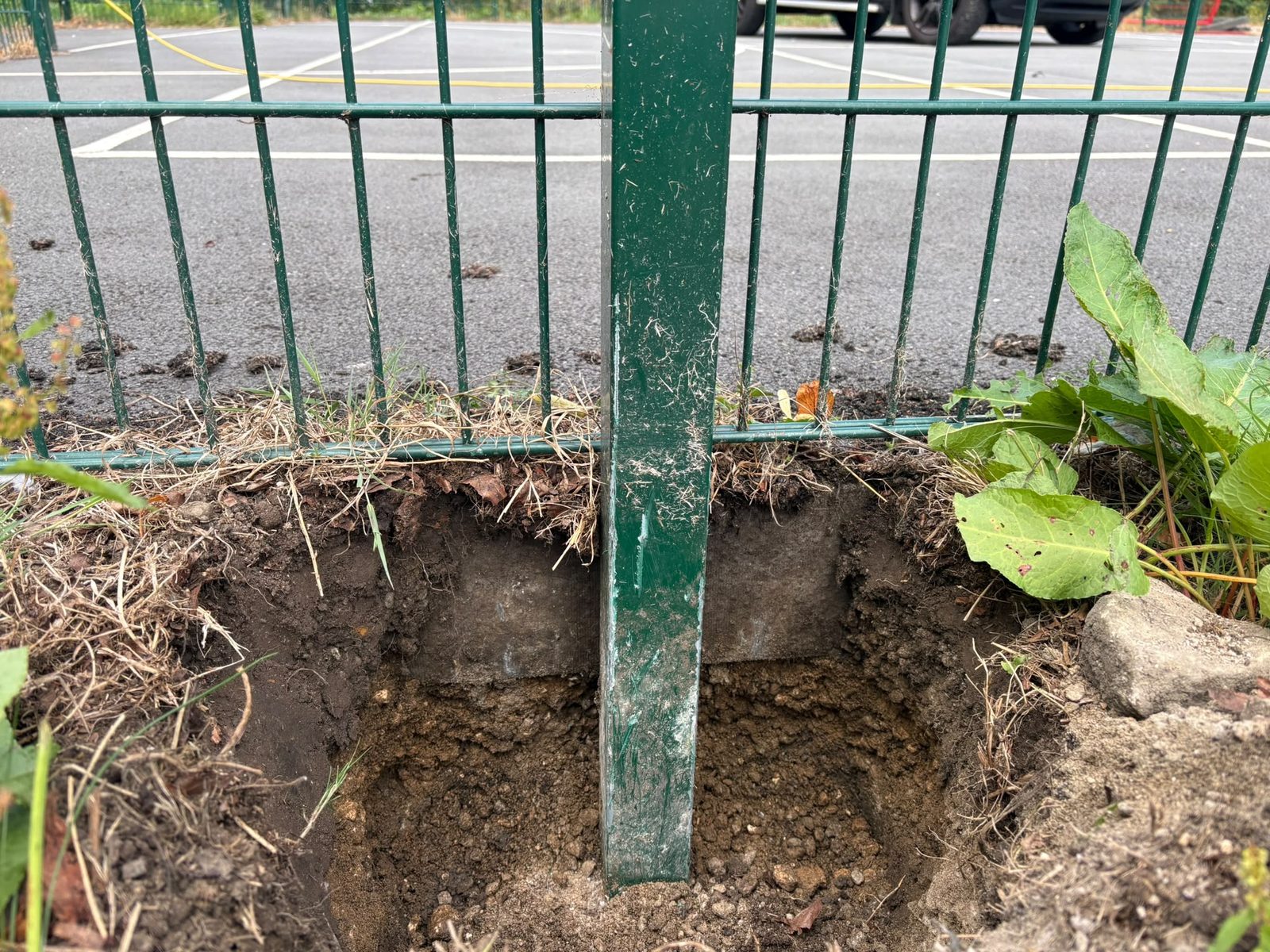
We dug trial holes alongside the posts that were worst affected.
The posts had been set shallow, with almost no concrete around them. On its own, that would explain movement eventually.
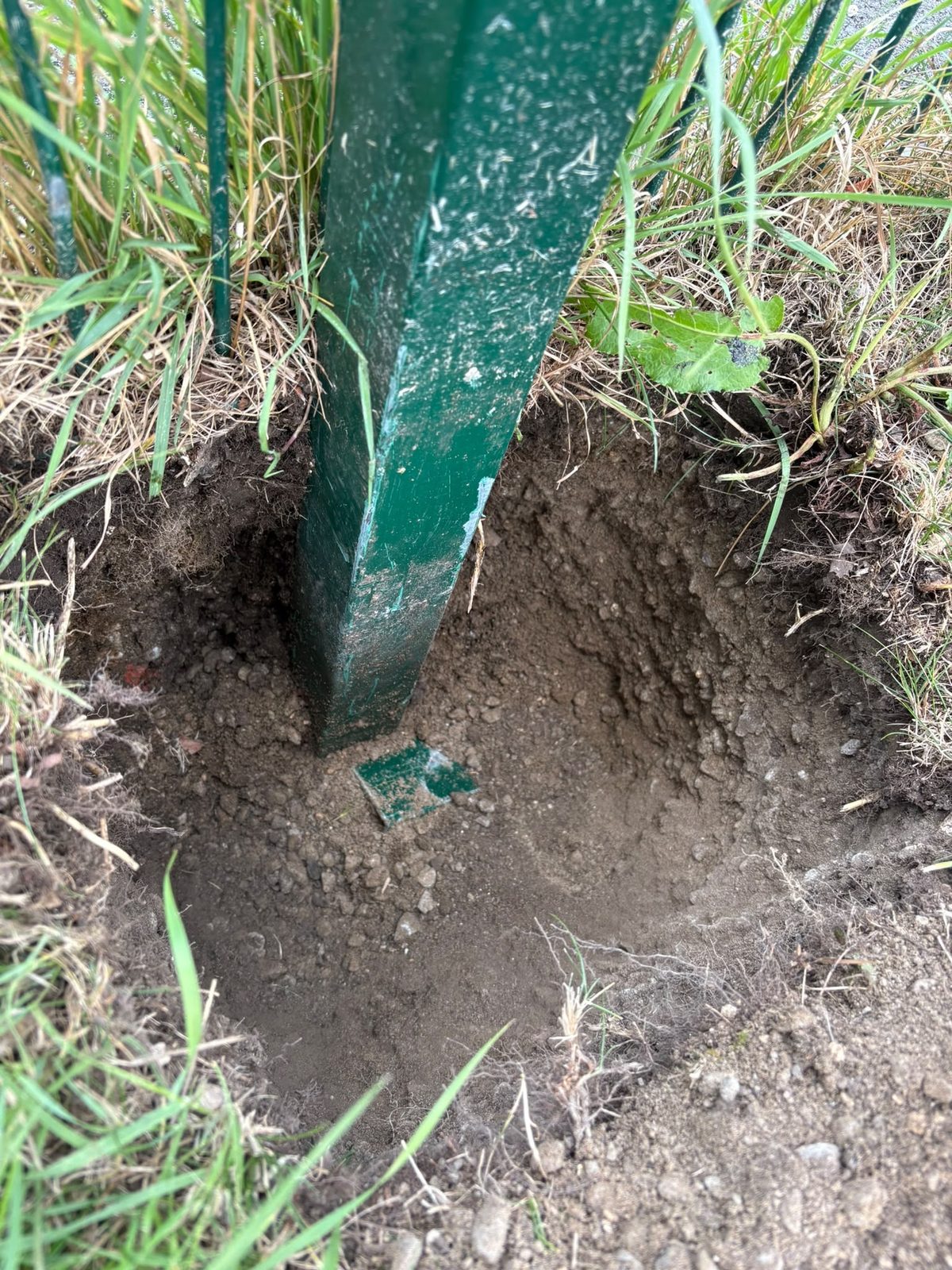
But the holes kept filling with water.
The ground around the MUGA was saturated. Water coming off the site had nowhere to go, and the tarmac playing surface was effectively holding it underneath with no route out. Every post along that run was standing in wet ground for most of the year.
Why that changes the whole job
A leaning post can be reset in an afternoon. If the ground it is standing in is waterlogged, the same phone call comes again in a year, and the school pays twice.
So before any fencing work at all, the drainage was dealt with properly by a groundworks contractor our installation team works alongside regularly. Not our trade, but very much our problem, because any repair carried out on top of that ground would have failed in exactly the way the original one did.
To the trust’s credit, the findings were taken on board straight away. No arguing about scope, no going away to think about it for a month, and no time lost finding somebody to do the drainage.
That is worth saying, because it is usually where jobs like this stall. A contractor turning up to fix a fence and reporting that the real fault is bigger, underground and outside the quote can very easily look like a way of running a bill up. It gets taken seriously when there is a relationship behind it, and we have been working with these schools for years.
That is the difference between fixing a fence and fixing the reason the fence broke.
The other problem, which had nothing to do with any of it
While we were on site, the school raised something separate. The children kept kicking balls over into the farmer’s field next door.
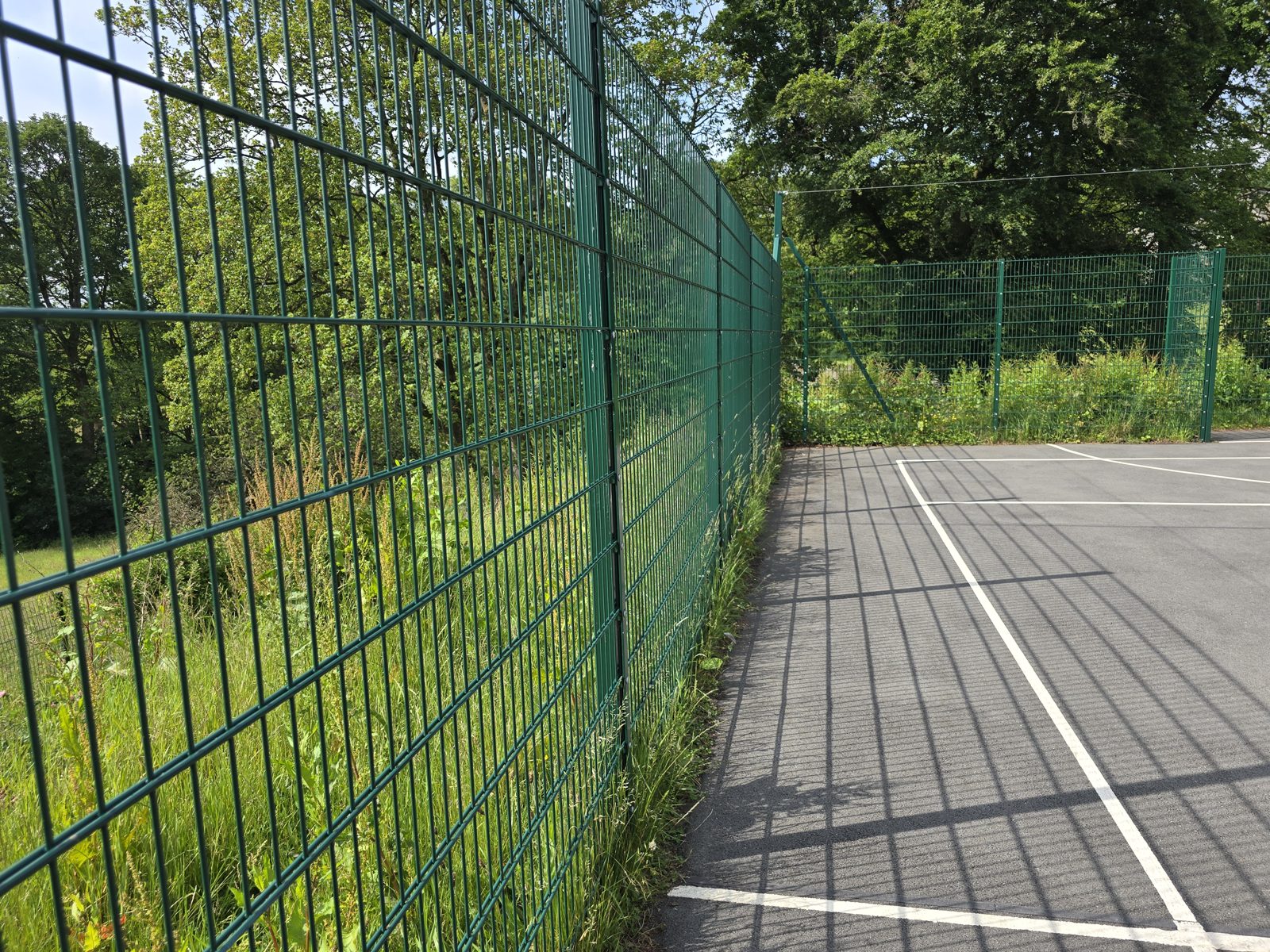
At 2.4 metres the fence was a perfectly decent boundary and no use whatsoever for the thing that happened every break time. Somebody had to go and fetch them, and the neighbour was getting footballs through his field.
So on that one side we raised it by a further 1.2 metres, to 3.6.
That is not a matter of ordering taller panels. A run at 3.6 metres catches far more wind and puts considerably more leverage on every post below it, so we added extra struts along that side to carry the load. On ground that had already caused one failure, going higher without strengthening the bracing would have been asking for the same problem twice. Those struts are visible in the finished photographs, and they are the proof the height was added properly rather than simply bolted on.
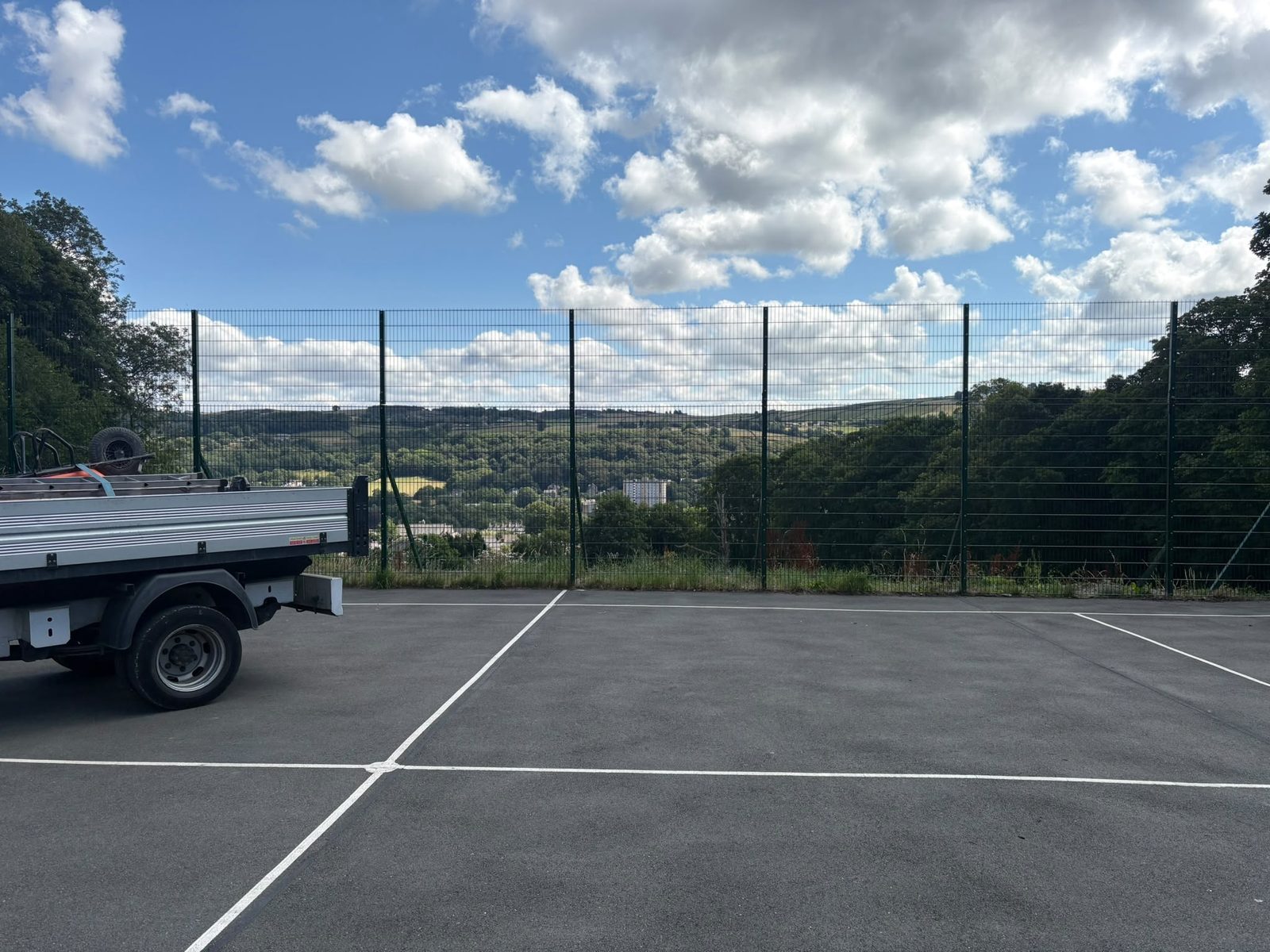
What was actually delivered
Drainage resolved first. Posts reset properly. The run straightened and strengthened. One side raised to 3.6 metres with additional bracing to suit. All of it carried out in two phases around the school’s own calendar rather than in one disruptive block, which on a live school site matters more than most people outside education realise.
The point worth taking away
Most fencing looks fine. Whether it is still standing in ten years is decided underneath the ground, where nobody looks and nobody photographs.
If your school or trust has inherited fencing it did not commission, the question is not whether it looks alright from the playground. It is whether anybody ever checked what it is standing in. On a MUGA in particular, where a tarmac surface can trap water across the whole footprint, that is a check worth doing before the first post moves rather than after.
Who did the work
We have worked at Oastlers School since 2021, across both the Keighley and Bradford sites, on everything from mesh fencing runs and gates to this. Ten separate pieces of work in five years. None of it was planned that way, it grew because each time the work was done properly we got asked back.
We now look after fencing, gates and access control at a number of Exceed Academies Trust schools across Bradford and Keighley. More on that another time.
Airedale Fencing is Gate Safe accredited, certificate 1855, CHAS certified, CHAS-0024323, and SSIP assessed via PQS. The company is a member of the Automatic Door Installation Association, membership 100250. Our installation teams are Enhanced DBS checked and carry recognised site cards. 300+ schools over 35+ years.
More on school fencing and how we work with multi academy trusts.
If your MUGA or perimeter is moving and nobody can tell you why, call 01274 964930 and we will come and look at it.