
There is a difference between a gate that works and a gate that is safe, and it is a difference that catches a lot of schools out.
A gate that opens when you press the fob, closes behind the last car and has never given anyone any trouble feels like a solved problem. It is not on anyone’s list. But an automated gate is a heavy piece of powered machinery that operates every single day within a few feet of children, and the things that make it safe are mostly invisible. Safety edges, photocells, the force it exerts when it meets something in its path. None of that announces itself when it stops working.
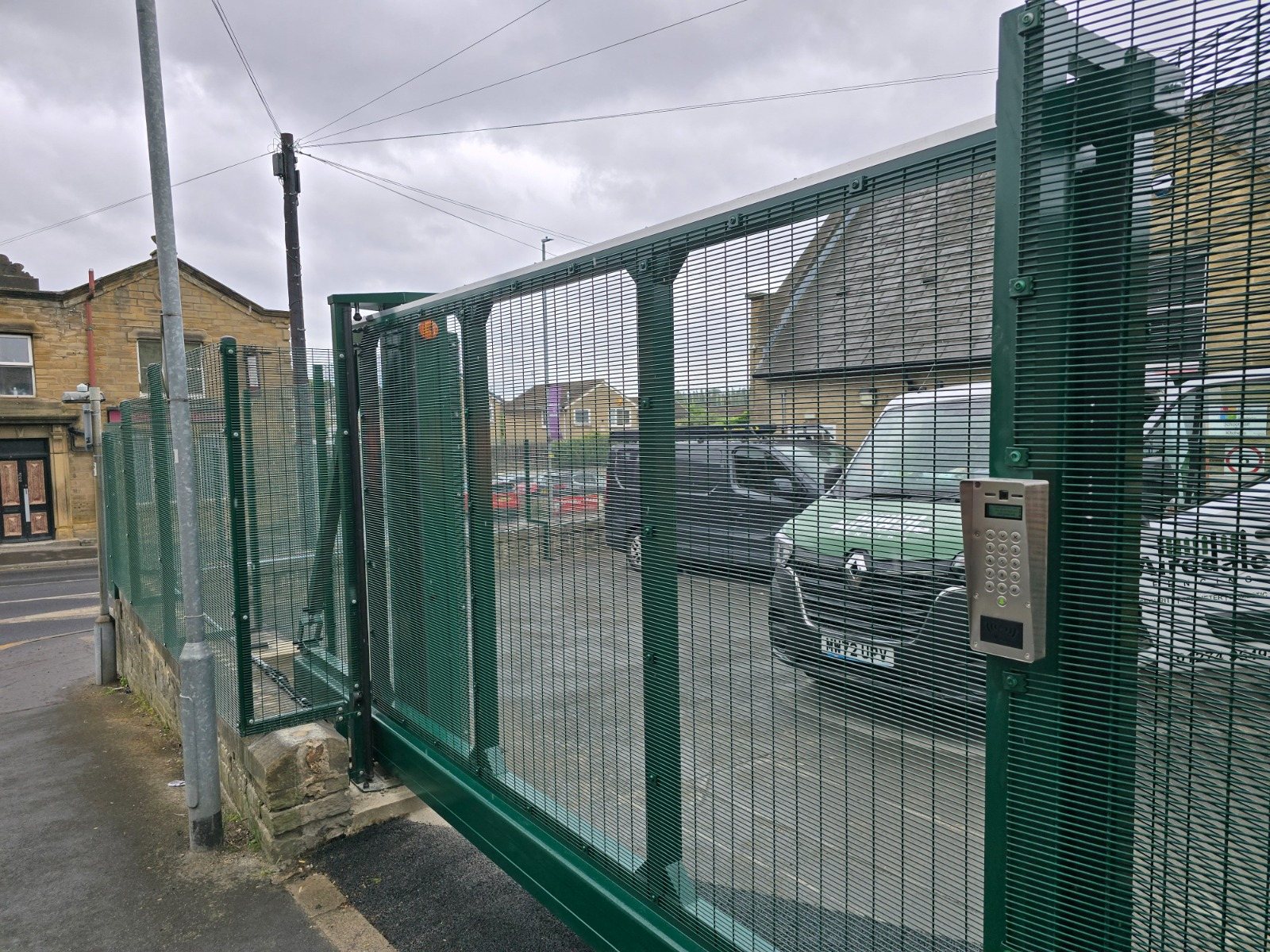
Gate Safe, the charity that has done more than anyone to raise standards in this area, has carried out survey work suggesting there could be as many as 24,000 schools in England with gates that are not safe. That is not a scare figure invented by an installer. It comes from the organisation that trains the industry.
Your automatic gate is legally a machine
This is the bit that surprises people. An automated gate is not treated as part of the building. It is classed as machinery, which puts it squarely inside the Provision and Use of Work Equipment Regulations 1998, better known as PUWER.
In plain terms, PUWER means the gate has to be suitable for the job, safe to use, properly maintained, inspected where necessary, and operated by people who have been shown how. Responsibility for that sits with the employer, which in a school setting is usually delegated to the head and the senior team, or to the trust’s estates function.
The catch is that compliance is not a one-off. A gate that was perfectly compliant the day it was commissioned can drift out of compliance quietly over a few years. Springs weaken. Safety edges get knocked. Photocells get blocked by a hedge that has grown, or a bin store that got installed nearby. The gate keeps opening and closing throughout, so nobody notices anything has changed.
That is the whole point: a working gate is not necessarily a safe gate.
What a compliant school gate actually looks like
Drawing on Gate Safe’s guidance and what we see on site week to week, here is what we would expect to find on a school installation that is in good order.
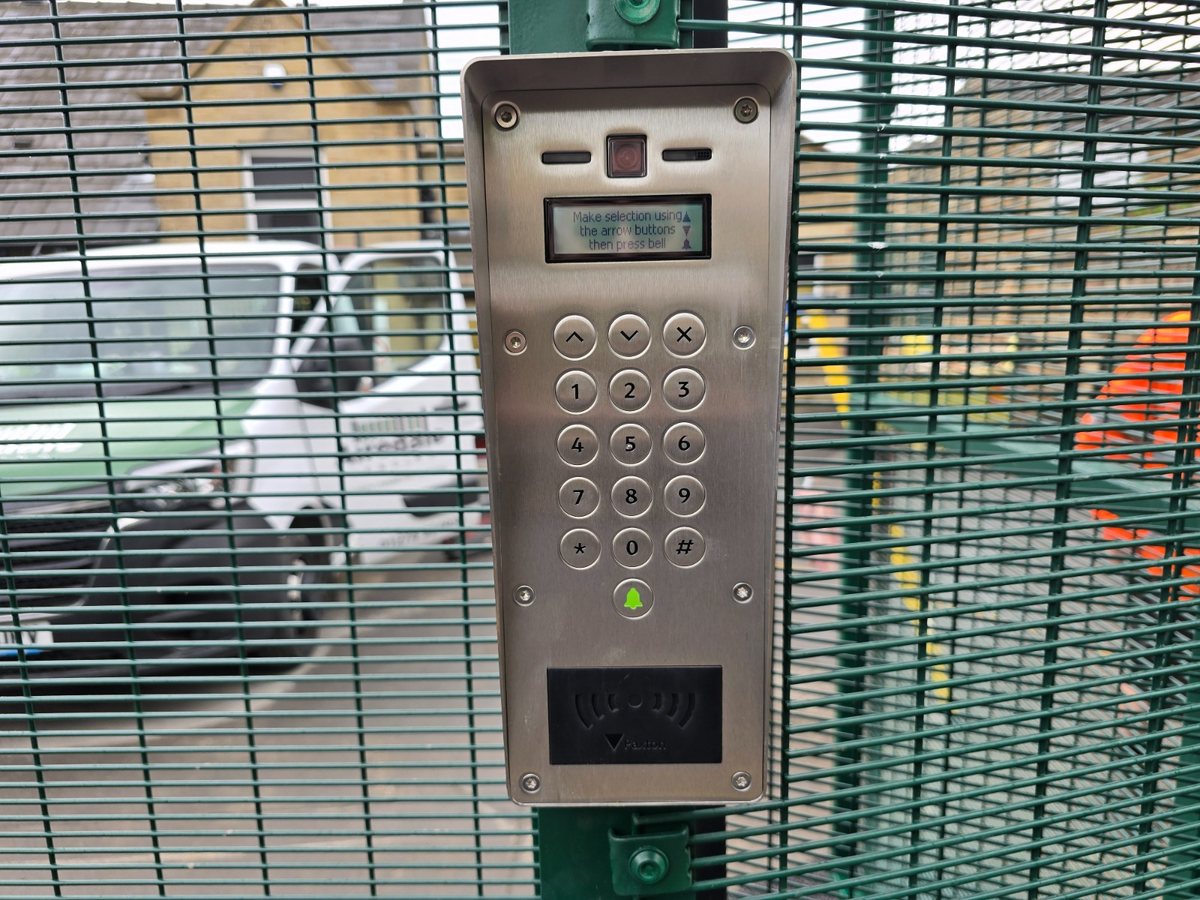
At least two different types of safety device, correctly positioned. One is not enough, because every type of protection has a blind spot. In practice that usually means photocells or a laser scanner working alongside pressure sensitive safety edges, so that if one fails to detect an obstruction the other should.
Force readings within accepted limits. This is the most important measurement on the whole gate and the one that is most often never taken. It is the actual physical force the gate applies when it meets an obstruction. You cannot judge it by eye or by feel. It has to be measured with the right instrument and recorded.
A documented risk assessment, ideally done before installation rather than retrospectively, by someone competent to do it.
CE or UKCA marking, along with a manual for the gate and evidence that staff were trained at handover.
Staff who know how to release it manually, and who can lay hands on the release key without hunting for it. If the gate fails during the day, that key is how people get in and out. It is worth asking your site team, without warning, whether they know where it is.
A regular service by a competent person. PUWER requires maintenance proportionate to the risk rather than naming a frequency, but Gate Safe recommend every six months for gates in this sort of setting, and more often where usage is heavy. Given a school gate can cycle dozens of times a day in term time, six-monthly is a sensible baseline.
Manual gates are not off the hook
There is a common assumption that if the gate is not powered then there is nothing to worry about. Accidents involving manual gates in schools are well documented, and if a manual gate has never been risk assessed the school is still exposed.
The details that matter on a manual gate are small and cheap, which is what makes it frustrating when they are missing:
- finger guards over the hinges, and a soft close so the gate cannot slam
- tamperproof fixings on the hinges
- sensible ground clearance so the gate does not catch on a sloping path
- a big enough gap between gate and post to remove any shear risk
- a colour that stands out, so that in a hurry a child can see clearly where the way out is
- built so that one component failing does not bring the gate down
None of that is expensive at the point of installation. All of it is awkward to retrofit, and much worse to explain after something has happened.
What you should get from a service visit
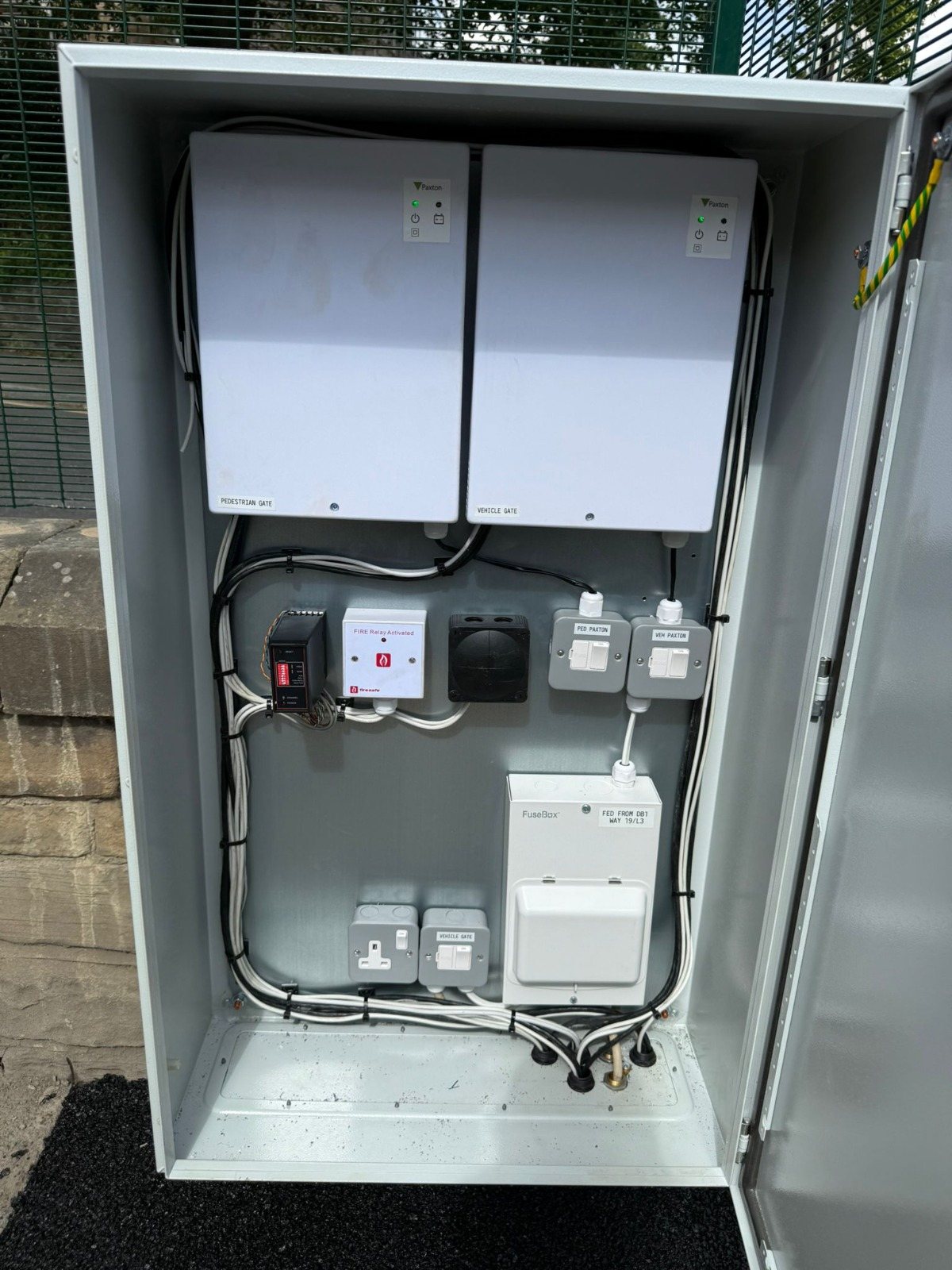
If you are paying for a gate service, the paperwork should show more than a tick and a signature. On our own service visits we would expect a certificate to record that the gate has been function tested and returned to normal operation, that force readings have been taken and sit within accepted ranges, that moving parts have been greased and consumables such as transmitter batteries replaced, and any wear or damage noted with a recommendation.
That last part matters. The certificate is not just a receipt, it is your evidence that you took reasonable steps to manage a known risk. If something ever goes wrong, the questions will be about what you knew, when you knew it, and what you did. A file of dated certificates with real readings on them is a genuinely useful thing to be able to produce. A visit with no force readings recorded is not worth much to you.
A straightforward way to check yours
You do not need us to do this first pass. Walk up to the gate with your site manager and ask:
- When was it last serviced, and is there a certificate with force readings on it?
- Can you see at least two different types of safety device?
- Does your site team know where the manual release key is, right now?
- Has anything changed near the gate recently, a new bin store, a fence, a hedge that has grown across a photocell?
- Has anyone ever risk assessed it, and can you find the paperwork?
If you cannot answer most of those, that is not a crisis, but it is worth acting on before your next inspection rather than after.
Gate Safe also publish a free guide for schools and run an independent technical helpline. We would rather you had good information from a neutral source than took our word for it.
Where we come in
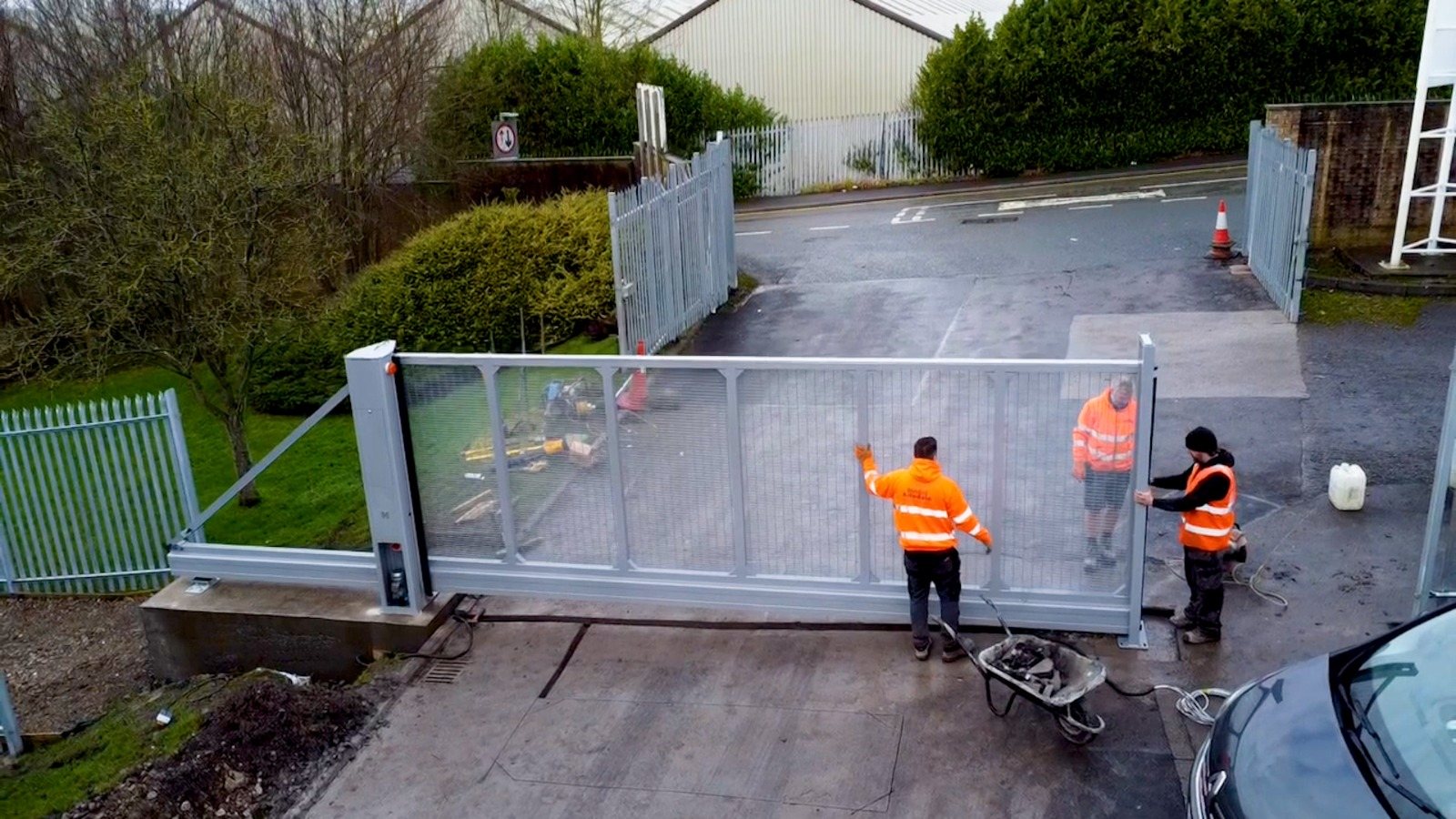
I hold the ADIA Authorised Automatic Gate and Barrier Technician accreditation, awarded through City and Guilds, and Airedale Fencing is a Gate Safe Aware installer. You do not have to take my word for either. My technician card carries a QR code and can be checked independently, and the Gate Safe certificate is numbered.
We install, service and repair gates and gate automation and access control across Bradford, Leeds and the wider West Yorkshire area. A lot of what we do is for schools and multi academy trusts, from single site fencing repairs through to bi-annual servicing contracts covering every gate across a trust’s estate.
If you want a gate looked at properly, or you would like your servicing put on a scheduled footing so the certificates arrive without you having to chase them, give us a call on 01274 964930 or drop us a line. Happy to take a look and tell you straight whether it needs work or not.